
The new Right to Repair Directive (EU) 2024/1799 marks an important step forward for consumers, sustainability, and the circular economy. But an essential question remains: how will it work in practice?
On March 19, 2026, the REPper Project hosted a high-level online round table to explore the challenges and opportunities tied to the implementation of the Right to Repair across Europe. The discussion brought together representatives from EU institutions, consumer organizations, industry leaders, and repair advocates to reflect on how Europe can make the Right to Repair a tangible and effective tool for consumers.
Watch the replay of the discussion
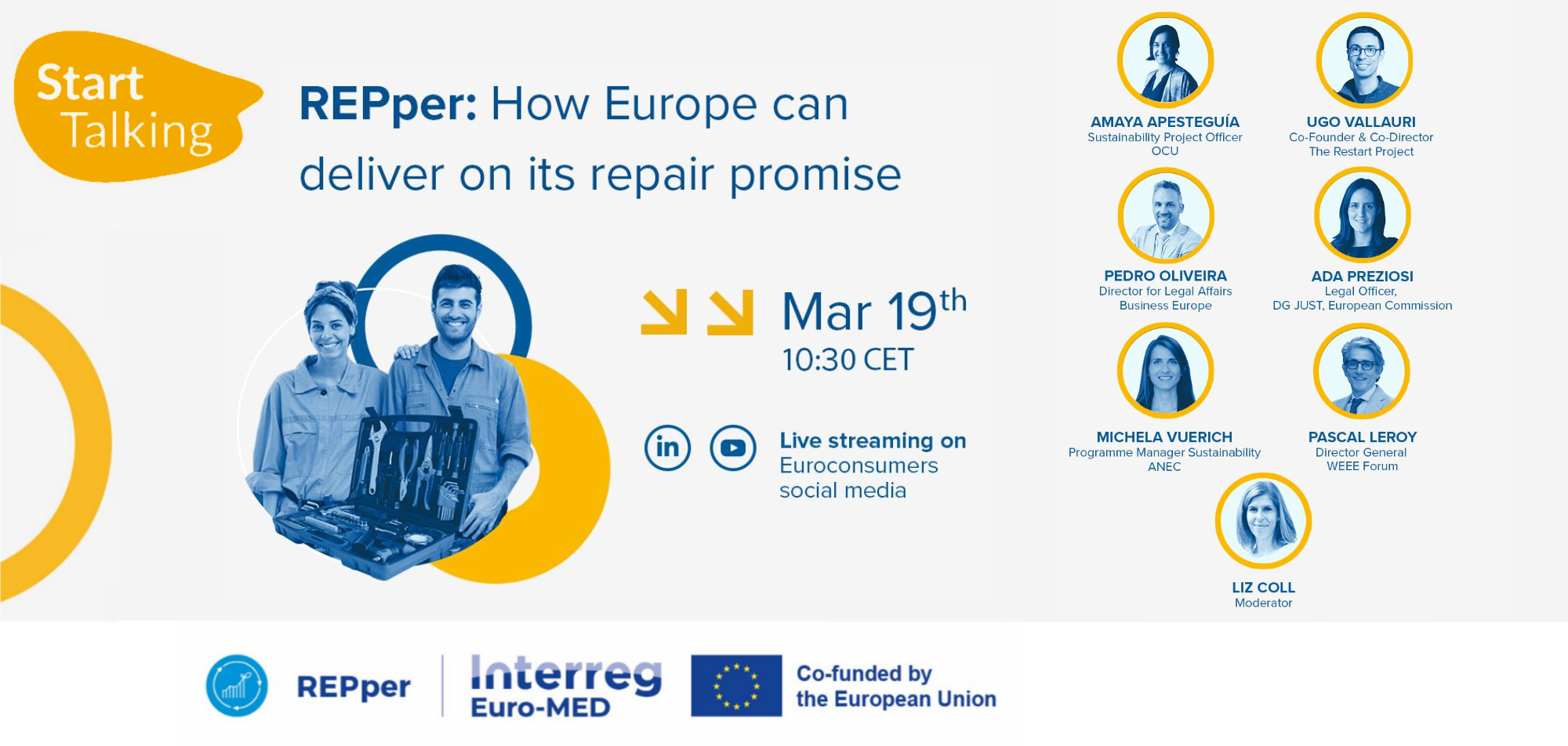
- 19 March 2026 | 10:30 CET
- Watch the replay of the webinar (Euroconsumers platform)
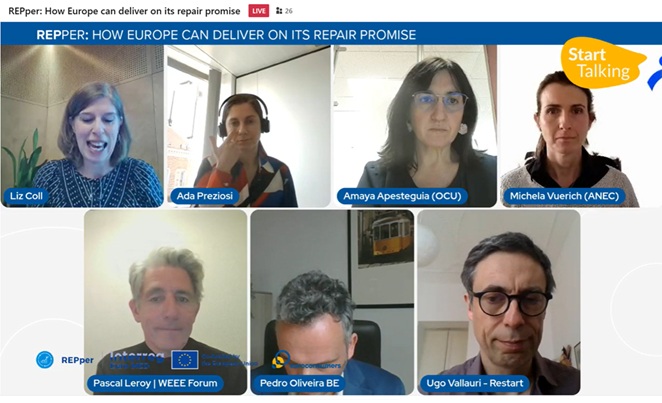
Moderator: Liz Coll
Speakers:
- Amaya Apesteguia, Representative of REPper project partners
- Ada Preziosi, European Commission, DG JUST
- Pascal Leroy, WEEE Forum
- Ugo Vallauri, The Restart Project
- Pedro Oliveira, BusinessEurope
- Michela Vuerich, ANEC
Key takeaways
The Right to Repair Directive is just the beginning, an opportunity to reshape consumer habits, reduce waste, and promote social and environmental justice. By investing in education, policy reforms, and community-based solutions, Europe can lead the way in making repair the norm not the exception.
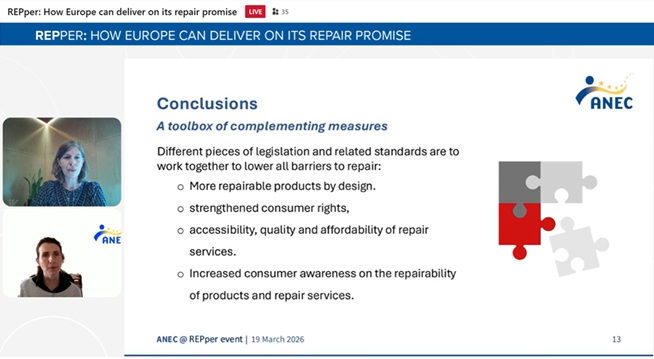
- Barriers to Repair: A Multifaceted Challenge: The Right to Repair faces multiple challenges, on the consumer side with high repair costs compared to cheap, low-quality replacements, limited consumer awareness of repair rights, scarcity of trained repairers, and products designed to be unrepairable. And from a policy perspective, weak market surveillance and waste systems further discourage repair, reinforcing a throwaway culture.
- Solutions for a Repair-Friendly Europe: To overcome barriers, Europe must adopt a systemic approach: education (integrating repair skills in schools and public campaigns), better information (repairability scores and digital product passports), incentives (repair vouchers and local repair hubs), and stronger policies (enforcing repairability standards and expanding product coverage to include fashion and digital goods).
- The Role of Business and Communities: Collaboration between policymakers, businesses, and society is essential. Businesses play a crucial role in making repair a viable business model, not just a legal requirement. The goal is to build a circular economy where products last longer and repair is the norm. Innovative projects like Repair Festivals and community-based solutions show how repair can drive economic and environmental value.