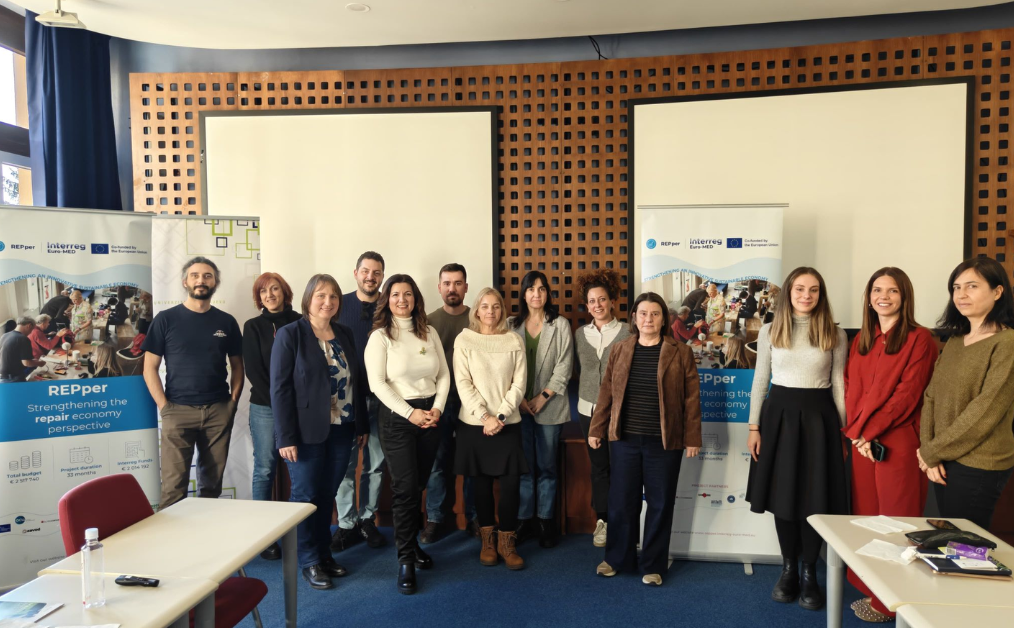
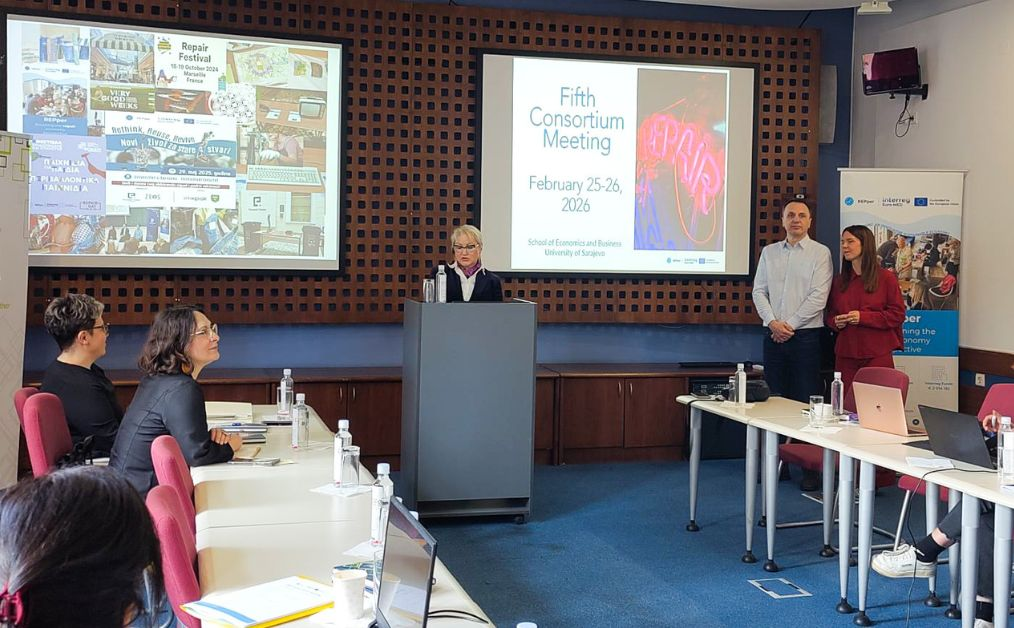
Sarajevo, 25–26 February 2026 – The REPper consortium, a dynamic alliance of 10 partners from 8 countries, including Albania, Bosnia-Herzegovina, France, Greece, Italy, Portugal, Slovenia, and Spain, gathered at the School of Economics and Business, University of Sarajevo, for its fifth consortium meeting.
This diverse partnership, comprising local and regional public authorities, business support organizations, higher education institutions, and consumer organizations, joined forces to advance the REPper project’s mission: fostering a thriving repair economy and promoting sustainable consumer choices across the Euro-Mediterranean region.
Highlights of the Meeting
The event kicked off with inspiring opening remarks from Meliha Bašić, Dean of UNSA-SEBS, and Dzana Sokolovic, representative for BiH ADRION & Euro-MED NCP. They highlighted the project’s transformative impact, emphasizing its role in delivering tangible results and innovative learning opportunities for students and professionals.
The meeting reinforced the importance of interdisciplinary collaboration and local engagement in advancing the circular economy. Partners discussed progress on the REPper Hubs network, REPper Factory, and Nudges, all designed to support SMEs, public authorities, and citizens in embracing repair and reuse practices. The project continues to bridge European and Mediterranean regions, fostering innovation and sustainable development.
A special thank you to the hosts, Prof. Dr. Almir Pestek and Prof. associé Dr. Tea Mioković Polić, for their leadership and hospitality, as well as to all partners for their commitment to building a more sustainable future.
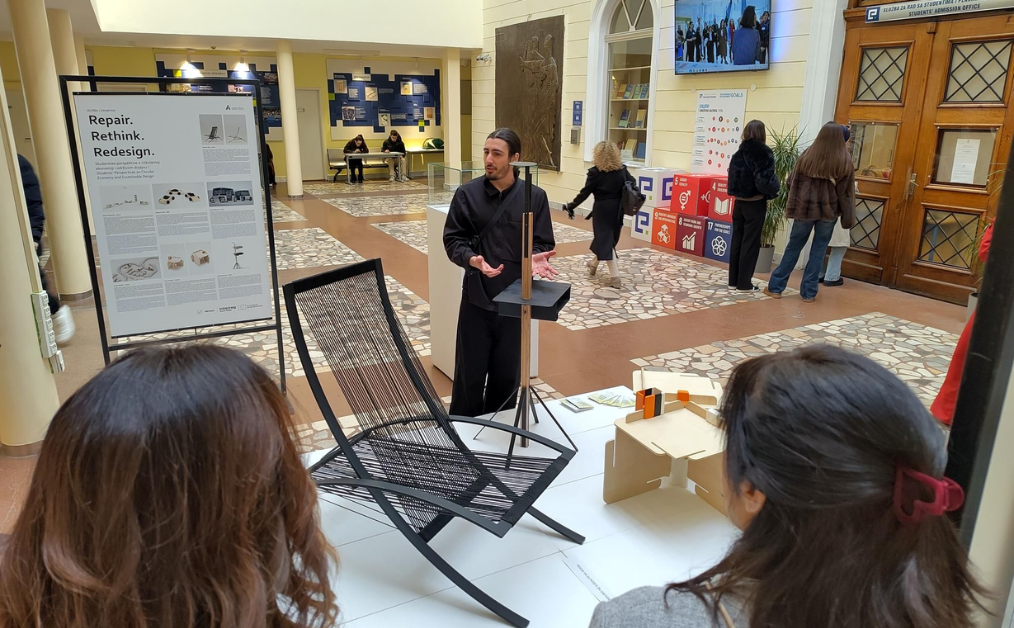
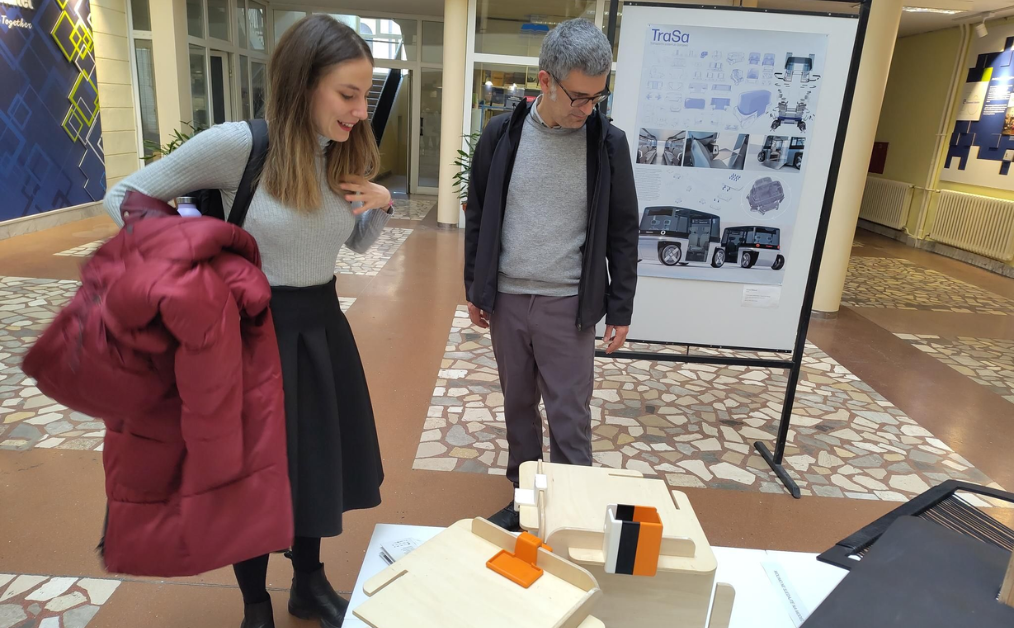
Student Exhibition: “Repair. Rethink. Redesign.”
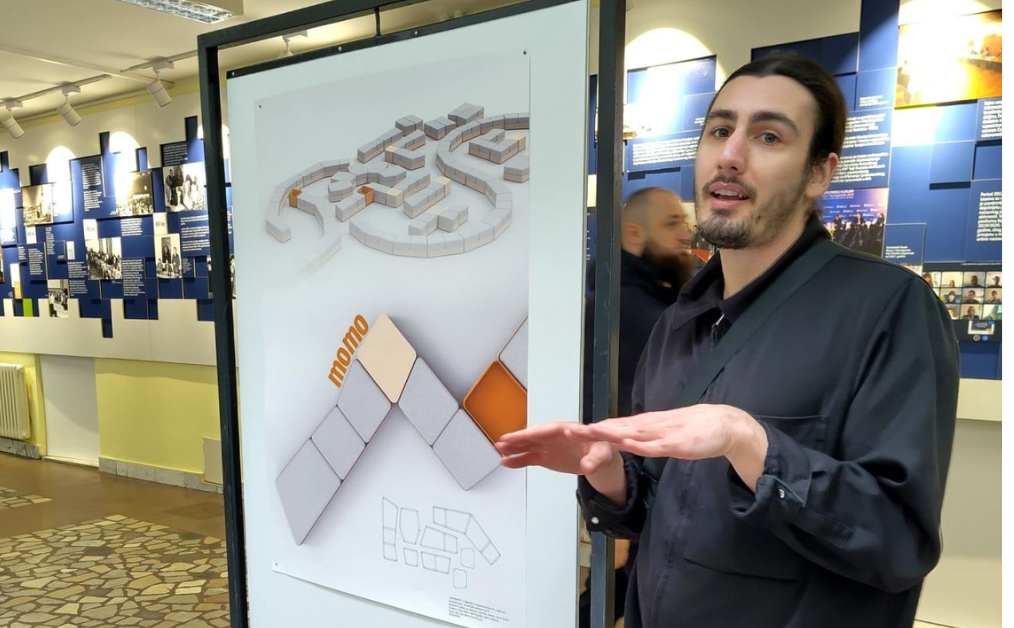
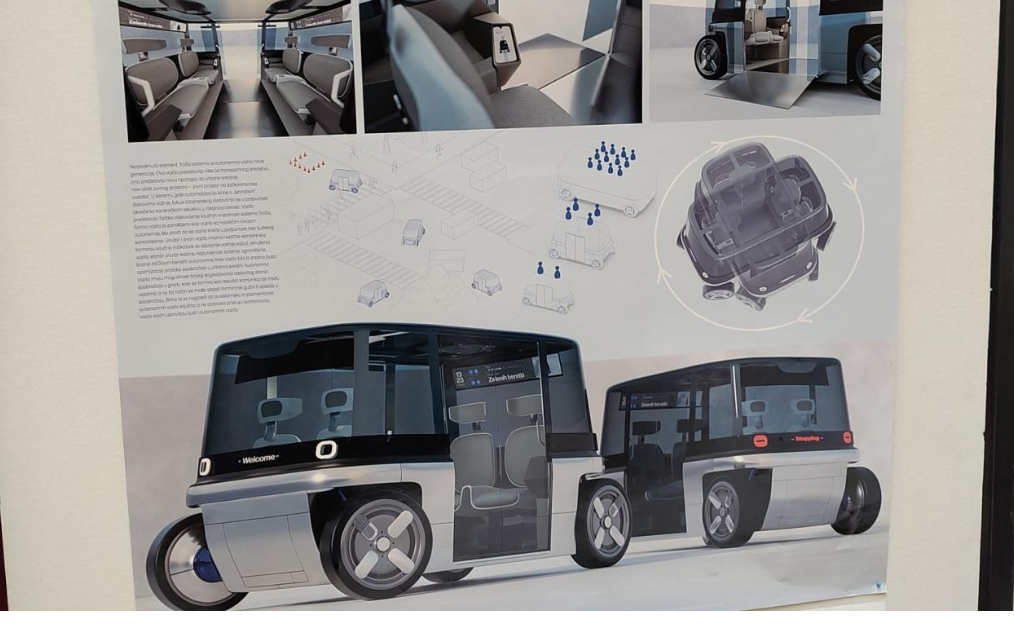
A standout feature of the meeting was the exhibition “Repair. Rethink. Redesign.”, curated by Armin Ćosić and showcasing works by students from the Academy of Fine Arts, University of Sarajevo. The exhibition demonstrated how repair principles align with the 9R circular economy strategy, featuring projects like modular furniture, repair-focused toys, and reimagined local transport concepts. This interdisciplinary collaboration between economics, eco-design, and fine arts underscored the potential of creative solutions to drive sustainability.